Upgrading the Turbo on a Land Rover 300Tdi
A direct-fit hybrid CHRA upgrade for the Land Rover 300Tdi turbo—more power, quicker spool, and better reliability.
Introduction
After finishing a full engine rebuild on my Land Rover Discovery 300Tdi, I ran into a problem: the original Garrett T250-04 turbo had suffered oil starvation due to a split feed line. The result was scoring on the shaft and enough play to make me uncomfortable running it any further.
Rather than replacing it with a standard unit, I decided to explore my upgrade options—something that might offer better performance without requiring major modifications. After comparing a few paths, I landed on what felt like the ideal middle ground: a hybrid CHRA cartridge from Turbo Rebuild UK.
The Role of the Turbo on a 300Tdi
The turbo on a 300Tdi isn’t just about power—it plays a key role in helping the engine run efficiently. By forcing more air into the combustion chamber, it allows more fuel to be burned cleanly, improving both output and drivability.
However, it’s also a component under constant stress, reliant on clean oil and proper cooling. A worn or leaking turbo can lead to symptoms ranging from reduced performance to dangerous conditions like diesel engine runaway. Keeping it healthy is essential.
Exploring Upgrade Options
I narrowed my search to a few practical options, each with its own balance of cost, complexity, and performance. Here’s how they stacked up:
OEM Replacement (Garrett T250-04)
Sticking with an original Garrett T250-04 would have meant a straightforward, direct-fit solution. It’s a proven, reliable unit that requires no modifications and preserves the factory setup. However, it offers no performance improvement over stock and comes at a fairly high cost for what is essentially a like-for-like replacement.
- Approx. Cost: ~$1,500 AUD
- Product Listing: Turner Engineering
VGT Uprated Turbocharger
The variable-geometry (VGT) option was by far the most tempting from a performance perspective. It promises quicker spool, better low-end torque, and a broader boost curve—but it also comes with trade-offs. These include higher cost, the potential need for fuelling adjustments, and custom plumbing to make it all work seamlessly.
- Approx. Cost: ~$2,500 AUD
- Product Listing: AlliSport
Hybrid CHRA Cartridge (Chosen)
Ultimately, I chose to replace just the CHRA (center housing rotating assembly) inside the original turbo. This approach kept the factory housings but upgraded the internals, resulting in better spool-up and a more responsive feel without needing to change the manifolds or fuelling. It was the most cost-effective path that still offered a tangible performance improvement.
- Approx. Cost: ~$700 AUD
- Product Listing: Turbo Rebuild UK
Resources like Garrett ID Guide and Garrett Parts List from TurboMaster were invaluable for confirming compatibility.
Installation Experience
The installation wasn’t a simple bolt-off, bolt-on job—but it was achievable with basic tools and some patience. I took care to mark the alignment of the original CHRA, thoroughly cleaned the housings, and reassembled everything using new gaskets and hardware.
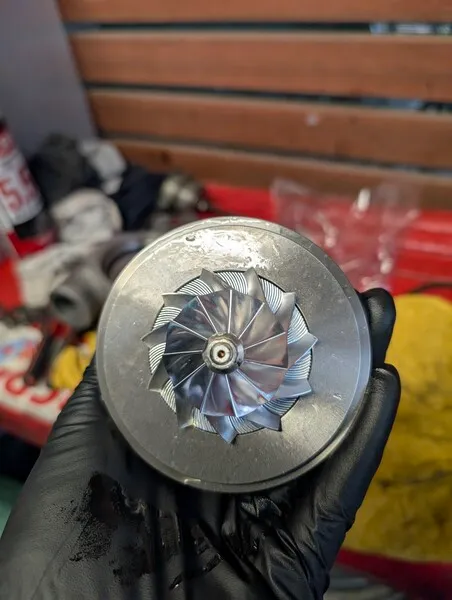
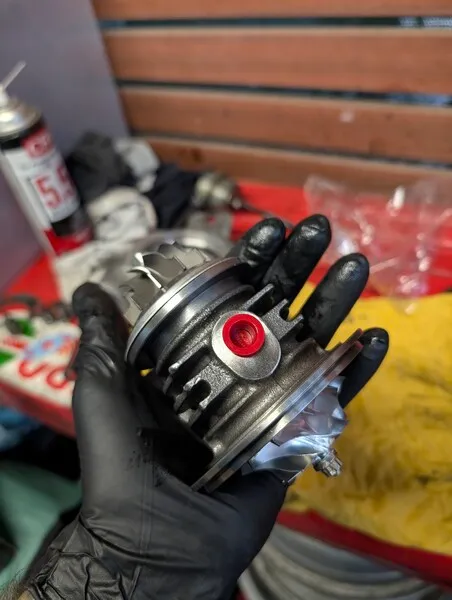
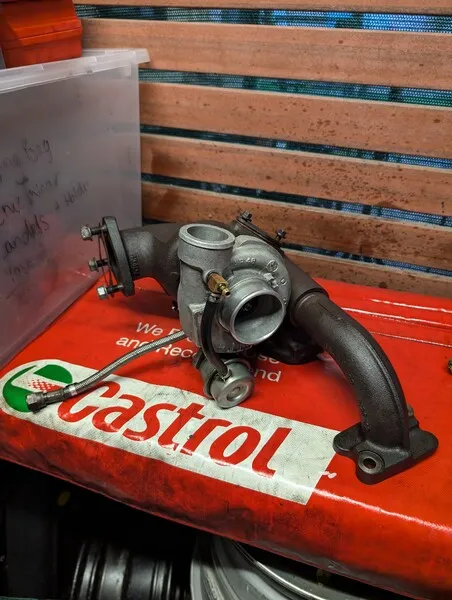
After installation, I cranked the engine with the fuel shut-off soleoid disconnected, just to make sure oil was circulating before the turbo saw any load.
While I’m not documenting the exact procedure here (there are too many variations between setups), the key takeaway is that the job is doable with some mechanical experience—or with help from a trusted workshop.
I also recommend replacing the oil feed line (ERR4894), as the original is prone to leaks. Instead of replacing this with a low-quality aftermarket option, I actually had my local ENZED workshop make a new one for me. This is 1000x more reliable than any aftermarket option you will find, and supporting local businesses is always a good thing.
First Impressions
The difference was immediately noticeable. Boost came on earlier—around 1500 RPM instead of the original 1800—and throttle response felt sharper across the board. I kept factory fuelling and have made no changes to the boost setting; even so, drivability improved significantly.
What I appreciate most is that the upgrade felt like an enhancement of the factory character, not a transformation. It still feels like a 300Tdi, just more eager and responsive.
Maintaining Longevity
Since fitting the hybrid CHRA, I’ve been paying closer attention to a few key areas to ensure the turbo remains in good health:
- Oil quality and level — clean, properly topped-up oil is vital for lubrication and cooling.
- Boost response and turbo noise — any unusual sounds or delayed spool-up could be early signs of trouble.
- Oil leaks — particularly around the turbo’s feed and return lines.
- Shaft play — I check for any movement during routine servicing, even though the new unit is tight.
- EGR temperatures — I monitor these while driving to help gauge thermal load on the system.
I also make a habit of idling the engine for 30-60 seconds before shutdown after harder driving, to help prevent oil coking inside the turbo.
Final Thoughts
If you’re weighing options for replacing a tired Garrett T250-04 on a 300Tdi, the hybrid CHRA route is absolutely worth considering. It’s not the most powerful option—but for those wanting a subtle performance boost with minimal hassle, it’s a clever upgrade that respects the original design while improving upon it.
Additional Resources
- Land Rover 300tdi Hybrid CHRA | eBay AU
- Garrett T250-04 Technical Data | TurboMaster
- 452055-0008 Parts List | TurboMaster
- How to Identify Garrett Turbos | TurboMaster
- Understanding Variable Geometry Turbos | TurboMaster
- Live VNT Turbo Install on 300Tdi | YouTube
This article is based on my personal experience with my own vehicle. It is not intended as instructional or professional advice. Consult a qualified mechanic for any work you’re not confident handling.